Saturday, July 9, 2016

Praying for Peace

Courtesy of patheos.com
I'm sure you've noticed that the world is a wreck. By all accounts things are spiraling out of control, with hatred and violence on the rise. Whether it's racialized violence in the US, vitriolic anger expressed towards the elder population in the UK over the #Brexit vote, or the continued genocide against Christians in the middle east, the world is steadily growing darker.

For Christians of all denominations the answer is to pray for peace. Yes, we must work for peace in the world through whatever means is appropriate but our work must be built on a foundation of solid prayer. Our prayer life is the foundation for everything we do in life. If we are not people of prayer than our work is in vain.

The Christian recognizes that we are people of prayer. In the Bible Jesus is seen beginning or ending important things in prayer. A great example of this is both the difficult teaching of the Last Supper and at the start of the Lord's Passion in the Garden. If we are to live Christ-like lives then prayer is an every day activity, and it should be our first course of action when the world turns to darkness.

The secular world mocks us for our prayers. My Facebook feed was filled with mockery of Christians who offered prayers after the tragedy in Orlando. That mockery quickly turned to blaming Christians for standing on belief and principal against the secularizing of our society. Our belief is our greatest way to stand up against evil forces in the world, and for this the secular world mocks us because they are afraid. They fear what belief means. They fear that we are right. If they didn't then their mockery wouldn't be rooted in anger

Non-believers want us to doubt the existence of God. We must never give into this temptation, for it is rooted in despair. Archbishop Fulton Sheen describes this best:

“The evil in the world must not make me doubt the existence of God. There could be no evil if there were no God. Before there can be a hole in a uniform, there must be a uniform; before there is death, there must be life; before there is error, there must be truth; before there is a crime, there must be liberty and law; before there is a war, there must be peace; before there is a devil, there must be a God, rebellion against whom made the devil.” 

Peace is rooted in God and His holy presence in society. Our secular society has created the violence it now despairs over by eliminating God from the public square. Prayer, in private and in public (in a manner that is not rooted in vanity) is our best way to bring God back into the public square. As Christians we are commanded to be brave people of prayer. In light of the tragedies in Dallas, Orlando, and the ongoing tragedies in the Middle East I challenge you as a Christian to prayerfully ask God for what we as Christians should do and advocate for to address the root causes of tragedy. Be open to what He tells you. It just might change your life.


Thursday, June 16, 2016

Gender Ideology is a War Against Creation

One of the issues that lead me into the Catholic Church was the Left's hatred of the natural order. When I was a progressive wannabe-activist I was very uncomfortable with the entire issue of "transgender" rights. I intuitively understood the real issue: that there is no such thing as a 'transgender' person, just people in deep need of mental health assistance. For the Left, to believe such things is heresy, as science is merely a social construct and is fluid, just like gender. 


Bishop Henry of Alberta, Canada, has rightly labeled the move by the New Democratic government to push gender ideology on students of that province as totalitarian."“The issues are not just about bathrooms, plumbing and urination, parental rights, safety of children, how people feel, GSAs [gay-straight alliances] and an imperfect Bill 10. What is at stake is the very order of creation.” Gender ideology is an attack on the order of creation itself because we can see at the most fundamental level evidence for a logic to creation. Everything is ordered. We see it in the structure of cells, the uncompromising nature of the laws of physics that make life on Earth possible but almost impossible anywhere else and, most importantly, we see it in the DNA of every human being. Our DNA determines our gender or sex (a false distinction if ever there was one) and no personal feelings will ever change that.

The Left has determined that liberty means ordering creation unto ourselves. To bend the world to fit our own perception. This is an expression of the ultimate logic of what Pope Benedict XVI called 'The Dictatorship of Relativism.' According to this view, EVERYTHING is relative, including science and the order of creation. This despite the fact that if modern medicine were to treat gender as fluid then the practice of medicine would not be able to function properly. 

Pope Francis, in a rare moment of absolute clarity, denounced 'gender ideology' as 'demonic.' "The Pope has received backlash from the LGBT lobby for criticizing “an academic perspective that sees gender identities as a spectrum rather than as binaries.” Basing himself on Biblical theology, the Pope has declared that God creates people as “male and female,” rather than an ever expanding spectrum of contrived pseudo-sexual genders." From the womb we are either male or female.

The word conception is revealing. At the moment of conception a human being is conceived. Conceived. Conceived. Man is an idea that is conceived in the mind of God, which is expressed in the womb of our mothers. God has total knowledge of who we are at the moment we are created. He knows our potential better than we likely ever could. While we are free to make choices about any number of ideas, choosing our gender defies both science and the natural order. Pope Francis called gender ideology demonic because at its core the movement rejects this concept entirely. Only I know myself and can change myself into anything I want, is the logic of the regressive Left. Gender ideology further separates man from God by denying the essential nature that God gave unto man.


Before God's wrath comes upon people he first allows them to go mad. In the story of King Nebuchadnezzar in the Book of Daniel we see the king erect a false idol for worship. Three Hebrews refused to worship and were cast into the fiery furnace as punishment, only to be protected by  God because of their faith. Later the king, after releasing them and having a change of heart, had a dream of a giant tree that puzzled him. Daniel, one of the three Hebrews, explained that his dream symbolized the king's pride and foretold of the fall of his nation and many nations thereafter due to his immense pride. Not long thereafter the king went mad, living like an animal for a period of seven years. Today, our culture and societies are going mad in the same way. Our immense pride, coupled with prosperity even in times of economic struggle have wrought a collective insanity that threatens not only the order of creation but our own social stability.

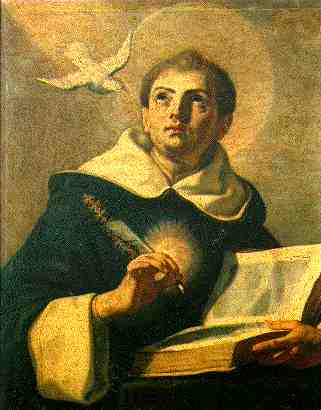
Gender ideology is a war against reality. St. Thomas Aquinas and those who built on his work long after his death would, in the early 20th century, refute gender ideology before it was conceived in the minds of the cultural Marxists. Perception begins in the mind, and never leaves the mind. It fails to grasp the only certainty we have: reality, the ordered creation. The ability to identify people based on sex is a primal, natural and normative function of reason. As man is a creature of reason gender ideology is not only unreasonable but functionally a rejection of reason.

Tuesday, May 24, 2016

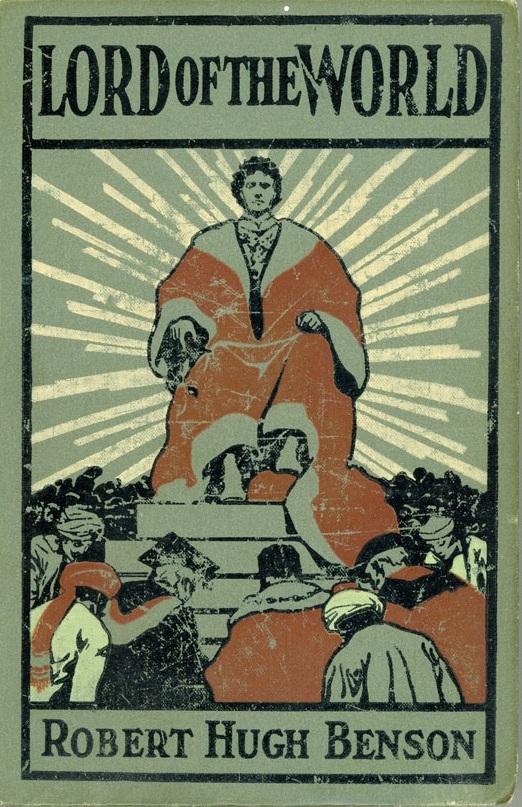
Book Review: Lord of the World

When a book is recommended by both Pope Emeritus Benedict XVI and Pope Francis it's worth considering. When that book is a 1984-esque scifi novel, well, I was intrigued. I'm not normally one to take book reviews from public figures too seriously but when two very, very different popes make a book recommendation it's worth heading.

The book? Lord of the World by Robert Hugh Benson, which tells the tale of a world gone fully secular. Protestantism is dead, Catholicism largely irrelevant to the public sphere, and Islam reduced to a handful of true believers. Secular humanism and all of the evils that are inevitable with it (loss of human dignity chief among them) reigns supreme. Into this environment a charismatic leader with an almost supernatural ability to charm people rises. Only the few Catholics in society oppose him, leading to the Church being driven underground. This novel is an end-times piece, a sort of Catholic Left Behind without any of the non-scriptural 'rapture' stuff that end-timers believe in for some reason.

Why was this book heavily recommended by Pope-Emeritus Benedict XVI and Pope Francis? If you read Lord of the World you'll see why pretty quickly. While the author gets a lot of his predictions about the future wrong (Telegraphs and typewriters in the mid-21st century?!) the meat of the story revolves around what St. John Paul II called the Culture of Death. Key features of the culture include rampant boredom, self-centeredness, and easily available euthanasia. One wonders if the author chose not to touch the issues of sexuality and abortion due to his own religious convictions and sense of propriety.

Regardless, euthanasia is a central and looming issue in the story. Instead of paramedics the emergency responders provide euthanasia. Depression, which runs rampant in the culture, can be cured with legally sanctioned suicide. If this seems far fetched consider that in 2013 the Dutch euthanized 650 newborn babies. Not abortions but the killing of newborn babies,sanctioned by the state and accepted by a population so numbed to the basic requirements of humanity because they have largely turned their backs on the faith.

That is the direction our culture is heading in, if Islam doesn't conquer the west first. Lord of the World details the rise of the anti-Christ amidst this cesspool of indifference, coming from the world of politics. He has no faith but in Humanity and institutes worship of idols to restore a sense of purpose in the population. He is seductive, mysterious, magnetic...and American. The author is British, which may explain that touch, though we shouldn't fool ourselves into thinking that America couldn't produce such a figure.

Written in 1907 Lord of the World  is a startling book that is still relevant today for any Christian with a taste for science fiction. I recommend it highly, giving it 4/5 stars. My only complaint is that there are parts of the book written in Latin (having to do with the Mass) and, given that I am unfamiliar with the Tridentine Mass, don't understand Latin. Call that the failings of being a convert. The book can be purchased cheaply from Amazon through the link on the sidebar if interested.

Monday, May 16, 2016

Musings on the Dignity of Work

Few people enjoy looking for a job. It's one of the most depressing bits of drudgery we can find ourselves involved, regardless of whether or not we're employed while we look. I'm presently seeking a new job despite having two part time jobs at the moment. Instead of another part time job or one one that pays like one I'm seeking a full time job. Yeah, me and everyone else it seems. It's an open secret that the economy is in a pretty rough place at the moment, with economic growth stagnant and job creation middling along at a snails pace.

Catholic Social Teaching formally teaches that the economy must serve people first. The Bishops and the Magisterium have a lot to say on this subject but in the end it all boils down to the radical idea that all things in life must place human beings and their liberty to pursue family and God first. We are not cogs in a machine, regardless of what the corporate capitalists or socialist will say. Man has a purpose, which is to know and love God in this life so we may be perfected and join him in the next.

They say you can't run an economy on the pursuit of God. Perhaps not, but it seems you can't run an economy based on pursuing nothing but profits either. There are those that say that work is the pure purpose of man and that we were made for work. CST teaches the opposite: that work was made for man. We are perfected in work. Work is almost sacramental in nature. How do we know this? The Bible begins with God working. In all things we are to emulate God. Our missions as Christians is to become Christ-like, to be Christ in the world. One means we have is work. Thus we work, either for ourselves or others, and put our all into the work we do, which when it is right-ordered perfects us. Work brings us closer to God.

This of course means that we have duties in the work we do. Christians shouldn't engage in work that separates us from God, work that is sinful in nature. I'd be suspicious of Christian abortionists or Christian strippers or any having any other job whose work by its very nature is offensive to God and violates His commandments. This is doubly true for Christians in political work. Can a Christian work for a socialist? I doubt it, given the history of hostility towards the faith by socialist governments, even the supposedly democratic ones.

Funny enough the formal teaching of the Church relies on property ownership being widespread. Employers are encouraged to share ownership of the organization with employees. Individually we should be owning land or shops or whatever other 'means of production' is available to us. The idea is to be both economically independent and interdependent -- that is, we must recognize that through work we build the Church through greater brotherhood with our neighbors. That's the rub: work brings us together. As in everything in Catholic Social Teaching and in the faith more broadly, it's about relationships. So pray that I find work as I continue looking and applying. I'm not being super picky, other than avoiding problematic jobs.

Saturday, May 7, 2016

Our Duties At the Start of This General Election

The advent of another general election season is upon Americans as the presidential primary season draws to a close. Given that the two major party candidates are historically unpopular, many voters, especially Christians, are expressing hostility to both candidates. Not liking either candidate is understandable. What isn't understandable is refusing to vote in the general election.

The Magisterium of the Church formally teaches that the typical Catholic in a country with free and fair elections has a responsibility to vote. This duty to vote is based on the teaching of Our Blessed Lord to spread the Gospel. Spreading the Gospel includes being witness in the electoral system by using the message of the Lord when we vote. There is no separation of Church and State in this regard, at least not in the way the secular world expects. We are not to leave our values at home when we vote. We are expected to bring Christ's love to the world. Yet, when we speak of love we forget that Christ's love included His speaking difficult truths to those whom He spoke. This can, and does include subjects that mark Christians as being intolerant (in the 'logic' of the secular world). The secular world, and we ourselves, often confuse Christ's love and tolerance He preached with blind acceptance of problems.

So where does that leave us in this general election? Periodically the US Bishops release Forming Consciences for Faithful Citizenship, a sort of guide for principled Catholic voting. It's not a partisan document, rather it's meant to inform the conscience of prospective voters. The US Bishops are Apostolic men and thus these words bear weight for any Catholic who claims to be faithful to the Church. Lately I've seen a lot of chatter online about how priest X in diocese Y says no faithful Catholic can vote for Candidate Z. With respect to the priesthood, these are the opinions of individual priests. They may or may not be correct. Rather, the tenor and tone of their statement when compared to that of the Bishops is a better guide. The Bishops make no overt claims about any candidate in the elections. Rather, certain principles emerge that help form our voting conscience. These principles are the core of Catholic Social Teaching: The Dignity of the Human Person, Subsidiarity, Solidarity, and the Common Good (or charity). In addition, certain issues are non-starters for any candidate, that is, traditional marriage, abortion, and euthanasia.

I'm not going to define each of those concepts, as that is the stuff of philosophy and political theory. Indeed, I'm doing just that in my doctoral dissertation and the length required to do those concepts justice isn't appropriate for a short blog post. Suffice it to say those principles combined with those issues that cannot be compromised are meant to be our starting points in voting. In my life this has made voting harder, not easier, because no candidate falls in line with those concepts perfectly. So what are we to do? We do the best we can. In the current election are choices come down to a candidate who passionately supports late term abortion, gay 'marriage,' and other issues that embrace those non-starters. Their opponent is a brash person who has changed their opinion on all manner of topics and uses harsh and crass language to describe cultural outsiders. So the task isn't easy, but we have no excuse to not vote. Pray, fast and then vote. That may be the only options you have. And remember: Christ expressed his love of those who didn't love him by pointing out difficult and unpopular truths. Surely they thought He was hateful or crossing the line. We cannot project our internal sinful response to words or positions taken by candidates onto those candidates by dehumanizing them, by turning them into hateful demagogues. That is the way of the world. It is not the way of Christ.


Saturday, April 30, 2016

Signs On Our Heads

The second part of my series on surviving secular college is up and and can be read here. The topic is the need for a good Newman Center, though I suppose one could include the presence of an orthodox campus ministry in this as well. Have a look and, as always, if you like what you see here or there follow me!

In the Mass, when the Gospel is about to be proclaimed by the priest or deacon we make the sign of the cross on our foreheads, over our lips  and over our hearts. We do this to as a sign of the inward prayer in our hearts. In doing so we ask that the Gospel always be in our minds, on our lips, and in our hearts. Any Catholic is familiar with this concept but it does bear repeating occasionally because these things we do in the Mass can feel like rote repetitions with no real purpose if we fail to remind ourselves of their meaning from time to time.

But this shouldn't be the only use of this sign of the cross. The sign of the cross can be a powerful blessing upon ourselves or a subtle request for assistance in times of struggle. Have you had bizarre thoughts burst into your head? Be they sexual, judgmental, or just drifting off into la-la land, making the same sign of the cross on your head as done during the Gospel Acclamation can be a powerful way to restore mental order. This is due in large part to this being a moment of prayer.

Turning to prayer in these moments of weakness can be our most powerful response to moments of weakness. We're told often to turn to prayer when faced with mortal sin but obviously this is easier said than done. When the mind wanders into troubling areas such as sexual fantasies, dwelling on personal slights, or anything that reflects the pride that resides in virtually all of our hearts, turning to prayer can be hard if we are in a public setting. How do you make the normal sign of the cross while riding a bus or sitting in a restaurant or in a meeting at work?

This is why I turn to the sign from the Gospel Acclamation. The sign of the cross has been my most power weapon, when even a micro prayer is included, in keeping my mind clear of debris and spiritual landmines. We must always turn our minds and hearts in prayer to Christ when we are faced with the near occasion of sin, even when it's the hardest thing in the world to do. The sign from the Gospel Acclamation is a subtle way of doing so when you wish to be discrete and silent in your prayerful appeals to the Lord for help.

Is there any support in Scripture for doing this? We see the faithful in both the Old and New Testaments has bearing signs on their foreheads marking them as the elect (Exodus 17:9-14 and Revelation 7:39:414:1). We also know that in the early Church the sign of the cross was commonplace. Tertullian writes "In all our travels and movements, in all our coming in and going out, in putting on our shoes, at the bath, at the table, in lighting our candles, in lying down, in sitting down, whatever employment occupies us, we mark our foreheads with the sign of the cross" (De corona, 30). This sign reminds us of the Holy Trinity, that doctrine of doctrines that separates Christians from other Abrahamic faiths, and invokes the Trinity to be with us in prayer. When turning in appeal to prayer for overcoming dangerous situations the sign of the cross, either the full sign or the Acclamation sign, can be a powerful weapon for overcoming temptation.

Wednesday, April 20, 2016

Catholics and Earth Day


The environment and our relationship with it has become one of the recurring and dominant topics of our societal discourse in the last decade. Few topics have their own holiday but the environment certainly does: Earth day. The day dates back to the birth of the contemporary environmental movement in 1970. According to the Earth Day network the purpose of the day was to have a “national teach-in on the environment” that mobilizes the people and politicians of the world to respond to the environmental crisis.

The day and the environmental movement have deeply pagan ideas at the core of the movement, including anthropomorphism of the Earth. By this I mean the idea that Earth is our 'mother,' most evident in the concept of Gaia the pagan Earth Goddess. Many Christians, myself included, have difficulty accepting the motives of the environmental movement due to the overt pagan nature of the movement. It, like the modern 'social justice' movement, bears all the hallmarks of a religion. There are creeds, a formal magisterium, and heretics. Now there's a call for an Inquisition, not like the one in history but the distorted vision of an Inquisition taught in our secular Protestant schools.

You may think from all of this that I deny human caused climate change. I don't, actually. I'm in the early stages of writing a doctoral dissertation on Catholic Social Teaching as it relates to sustainable development. As it happens I tend to agree that the evidence points to the climate changing and that we, collectively, need to continue to investigate the causes as well as the claims that the data is being distorted purposefully by the scientific community. True scientific skepticism requires no less.

What duty do Christians have to the environment? Like everything else in our faith, the duty of Catholics is one of relationship.We are called to have a relationship with God, right? Genesis tells us that we were given the Earth to till, work, and keep. In Laudato Si, Pope Francis reiterates what John Paul II and Pope Emeritus Benedict XVI both taught, that we were given the Earth as stewards. Stewardship has long been a concept in Catholic Social Teaching, taught traditionally as our individual and collective responsibility towards our brother and sister.

Stewardship of creation is hard for some to grasp so I'll use a metaphor. Suppose your father restored a classic car by hand. The car meant a lot to him, going so far as to call the car the most beautiful he had seen. On your 16th birthday, after getting your license, he gives you the keys to car to drive to school, work, and on dates. How would you treat the car? In theory you'd treat the car with respect because you know how much work your father put into building the car and how much he loved it. You'd know that the car was given to you as a sign of your maturity, at least in theory. Of course, being a 16 year old sinner you'd likely drive the car less-than carefully, and likely would do damage to it.

That's the situation we are faced with. We've taken creation, which we are to be stewards of, and abused it, going beyond tilling and keeping the Earth and instead have decided, in the words of Pope Francis, that the Earth that God declared to be 'good' was not 'good enough' and have polluted the place in the name of greed and selfishness. That'd be a bit like taking your dad's classic car and putting a hideous, ugly plastic neon green spoiler on it and dumping fuel additives that add power but damage the engine to better facilitate drag racing.

The way we treat the Earth should reflect our attitudes towards God and towards one another. This is a concept too complex for a short blog post but the essence of this is this: we are commanded to love one another and to love God. Our love of God should extend to those things he has entrusted to our care, whether its creation or our brothers and sisters who are at vulnerable. Just as abortion is a condemnation of our love for one another, so too are acidic seas, industrial run off that kills streams, and forest management practices that both leave forests more prone to wildfires and leave local populations unemployed.  We are to treat creation with respect not because creation is a god or goddess of some kind but because they are the property of God entrusted to us. So on this Earth day reflect on both the disordered way the secular world celebrates creation and our own attitudes towards the Earth and our relationship to God. Everything should come back to that relationship. That's part of the joy of Catholicism: everything is about relationships. Let's act like it.